
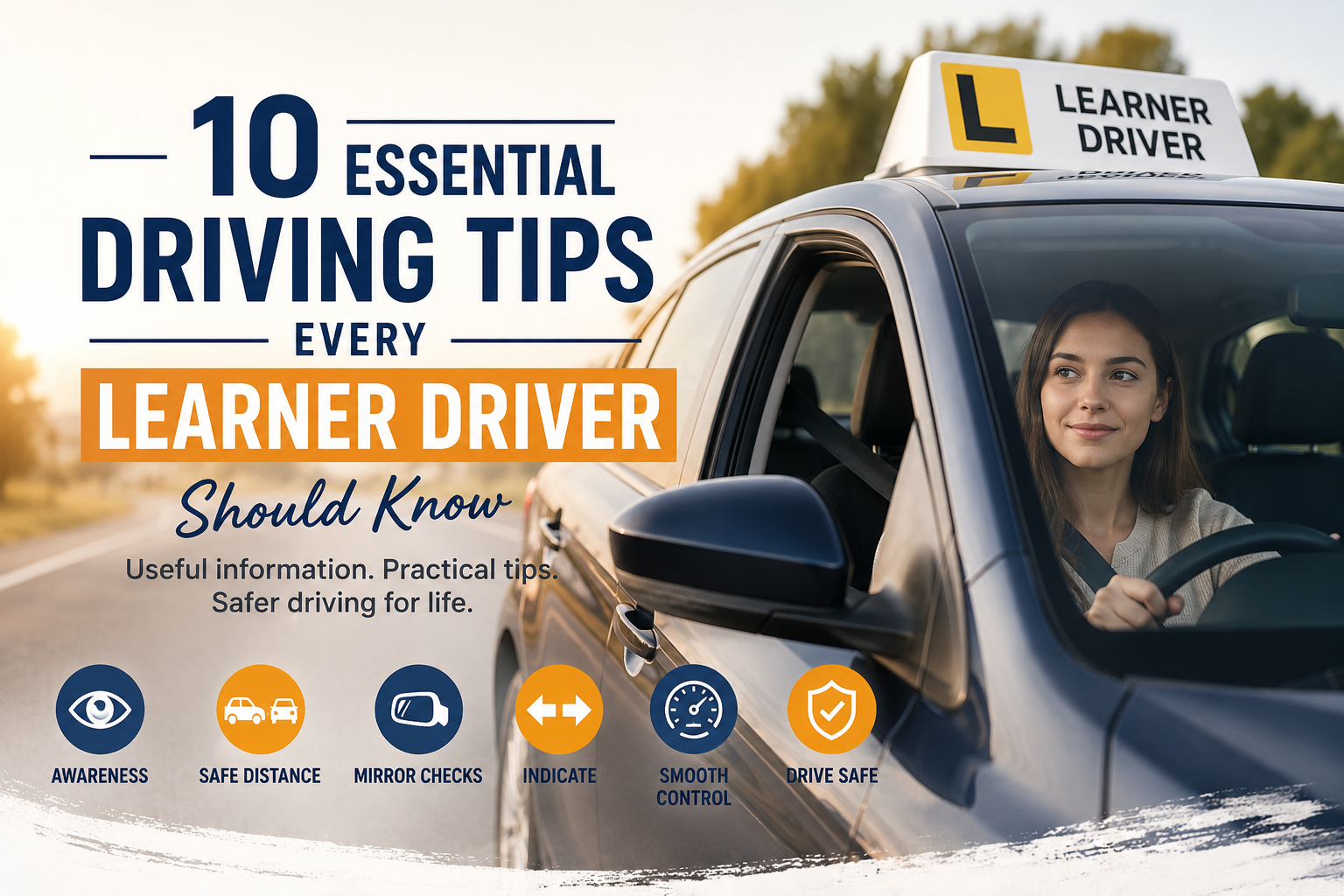

Learning to drive is an exciting milestone, but becoming a safe and confident driver takes more than simply passing your driving test. Good driving habits should be developed from your very first lesson.
Whether you’re just starting out or preparing for your driving test, these practical driving tips can help you become a safer, more aware, and more confident driver.
1. Look Well Ahead
One of the most important driving skills is learning to look beyond the vehicle directly in front of you.
Instead of focusing only on what’s happening immediately ahead, regularly scan the road further in front. Look for:
- Traffic lights and signs
- Pedestrians and cyclists
- Intersections
- Parked vehicles
- Road hazards
- Vehicles entering or leaving the road
Looking ahead gives you more time to react and reduces sudden braking or steering.
2. Keep a Safe Following Distance
Following too closely gives you less time to respond if the vehicle ahead suddenly brakes.
A useful habit is to maintain a minimum three-second gap in normal conditions. Increase the distance when conditions are difficult, such as during rain, at night, or on unfamiliar roads.
Remember: the faster you’re travelling, the more distance you need to stop safely.
3. Check Your Mirrors Regularly
Your mirrors provide important information about what’s happening around your vehicle.
Develop the habit of checking:
- Your rear-view mirror
- Your side mirrors
- Your blind spots when necessary
Mirror checks are particularly important before changing lanes, turning, slowing down, or moving away from the kerb.
Don’t just look at your mirrors—use the information you see to make better decisions.
4. Use Your Indicators Correctly
Indicators aren’t simply something you use because you’re turning.
They communicate your intentions to other road users.
Use your indicators when appropriate before:
- Turning
- Changing lanes
- Entering or leaving a parking area
- Moving away from the kerb
- Performing other manoeuvres
Remember that indicating doesn’t automatically give you priority. Signal, check, then make your manoeuvre when it is safe.
5. Don’t Rush at Intersections
Intersections can be challenging for learner drivers because you need to process multiple sources of information at once.
Before proceeding, pay attention to:
- Traffic lights
- Give Way and Stop signs
- Pedestrians
- Cyclists
- Vehicles approaching from different directions
- Your intended direction of travel
Take your time and make sure you understand who has priority before moving.
6. Practise Smooth Braking and Acceleration
Good driving should feel controlled and predictable.
Try to avoid:
- Harsh acceleration
- Sudden braking
- Unnecessary steering movements
- Constant changes in speed
Instead, look ahead and anticipate what’s coming. If you see traffic slowing several cars ahead, you may be able to gradually reduce your speed rather than braking heavily at the last moment.
Smooth driving is usually safer driving.
7. Learn to Read Road Signs
Road signs provide important information about speed limits, hazards, restrictions, directions, and road conditions.
Don’t wait until you’re right beside a sign to read it.
As you drive, scan ahead for upcoming signs and give yourself enough time to understand what they mean.
A good learner driver doesn’t just know the signs—they learns to anticipate what the road environment is telling them.
8. Stay Focused on Driving
Distractions can affect your ability to see hazards and react quickly.
When you’re learning, your attention should primarily be on driving.
Avoid distractions such as:
- Using your phone
- Adjusting the stereo unnecessarily
- Eating while driving
- Looking away from the road for extended periods
- Becoming distracted by passengers
Put your phone away before you start driving and keep your attention on the road.
9. Don’t Be Afraid to Ask Questions
Learning to drive isn’t about knowing everything immediately.
If you don’t understand something during a driving lesson, ask your instructor.
You might ask:
“Why did we slow down here?”
“When should I check my blind spot?”
“Who has priority at this intersection?”
Understanding why you need to perform a particular action can help you remember it and apply it in different situations.
10. Practise Between Lessons
Driving lessons are important, but additional supervised practice can help reinforce what you’ve learned.
If you’re legally permitted to practise with a supervising driver, use that time to work on specific skills rather than simply driving around without a goal.
For example, dedicate one session to:
- Parking
- Lane changes
- Intersections
- Roundabouts
- Residential streets
- Highway driving
- Smooth braking
Consistent practice helps turn individual driving techniques into natural habits.
Becoming a Safe Driver Takes Time
Passing your driving test is an important achievement, but it’s only the beginning of your driving journey.
The best drivers continue learning after they receive their licence. They stay alert, anticipate hazards, follow road rules, and adjust their driving to suit traffic and road conditions.
As a learner driver, don’t worry about becoming perfect overnight. Focus on building safe habits one skill at a time.
With quality instruction, regular practice, and the right mindset, you can develop the confidence and skills needed to become a responsible driver.
Ready to Start Learning?
If you’re preparing to get your licence, professional driving lessons can give you structured practice and guidance from an experienced instructor.
Start building your driving skills today—and work towards becoming a safe, confident driver.
