
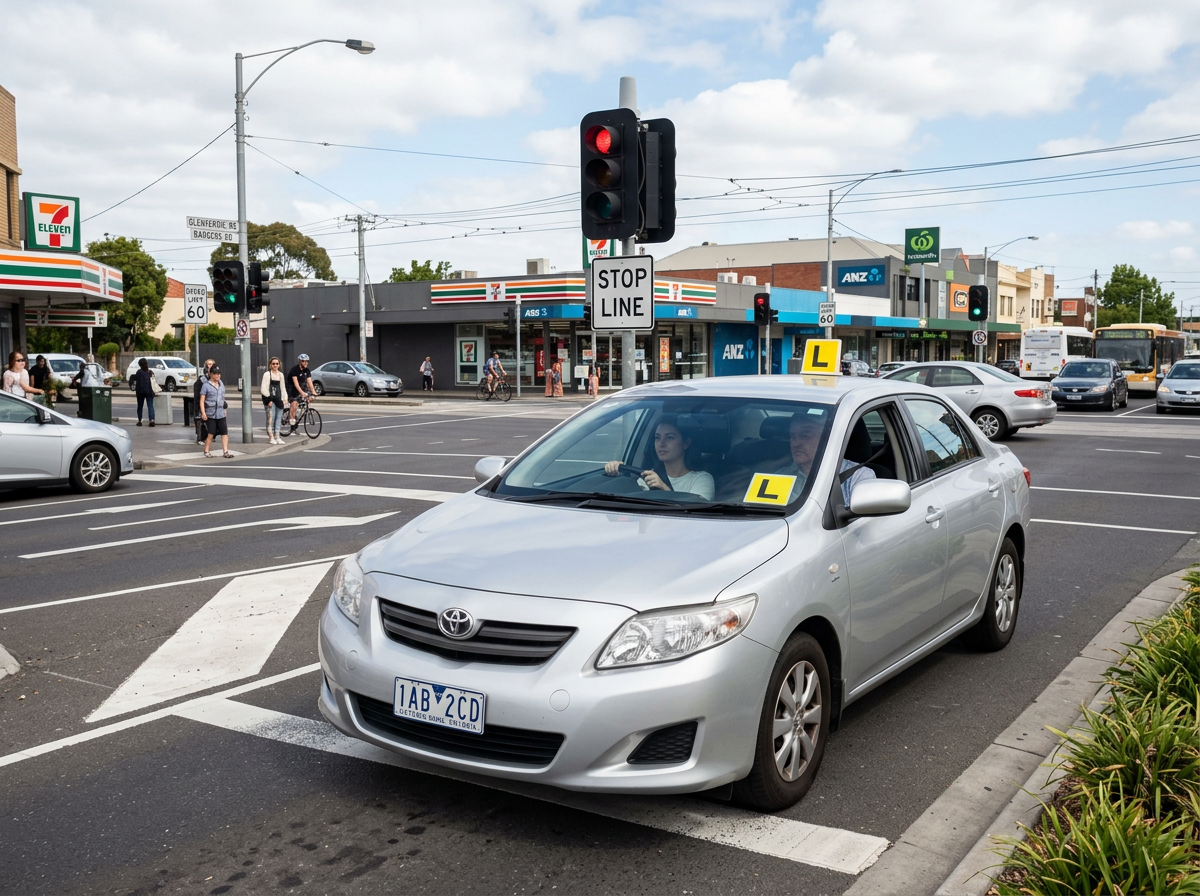

7 Reasons Learners Struggle With Driving Confidence
Feeling nervous when you drive doesn’t mean you’re a bad driver. It means you’re still learning.
For many learner drivers, the hardest part of learning to drive isn’t understanding how the car works.
It’s confidence.
You may know what you’re supposed to do, but when you suddenly approach a busy intersection, change lanes, enter a roundabout, or notice a car behind you, everything can feel different.
Your hands tighten on the steering wheel.
You start second-guessing yourself.
You become worried about making a mistake.
And sometimes, the more you worry about making a mistake, the harder it becomes to drive naturally.
If this sounds familiar, you’re not alone.
Let’s look at 7 common reasons learner drivers struggle with confidence—and what you can do about them.
1. You’re Trying to Think About Everything at Once When you’re new to driving, almost everything requires conscious attention.
You might be thinking:
“Am I in the right lane?”
“What’s my speed?”
“Do I need to indicate?”
“What is that car doing?”
“Is that traffic light changing?”
“Am I too close to the kerb?”
That’s a lot to process. Experienced drivers often perform many of these actions almost automatically because they’ve developed habits through repetition.As a learner, you haven’t built those habits yet.What helps? Don’t expect yourself to master everything at once.Build your skills progressively.First become comfortable controlling the vehicle. Then work on observation, positioning, traffic situations and more complex manoeuvres.
Confidence grows when your brain has fewer things to consciously manage.
2. You’re Afraid of Making Mistakes
A learner driver who is terrified of making mistakes can sometimes become more hesitant.You may spend so much time worrying about doing something wrong that you struggle to make a decision.
But here’s something important:
Making mistakes is part of learning to drive.
You might stall.
You might take the wrong turn.
You might hesitate at an intersection.
You might position the car incorrectly.
That doesn’t mean you’re failing.
It means you’ve found something you need to practise.
A good driving lesson isn’t about creating a perfect performance every time.
It’s about identifying what needs improvement and working on it safely.
3. You’re Comparing Yourself to Other Drivers
You see someone confidently changing lanes.
Someone else parks perfectly in one attempt.
Another driver seems completely relaxed in heavy traffic.
And you think:
“Why can’t I drive like that?”
Remember that you’re comparing your learning stage to someone else’s finished product.
You don’t know how many lessons they had.
You don’t know how many times they practised.
You don’t know how nervous they were when they first started.
Every driver began somewhere.
Your goal isn’t to drive like everyone else.
Your goal is to become better than you were yesterday.
4. You Haven’t Had Enough Practice in Real Situations
Driving around a quiet street can feel completely different from driving through busy traffic.
That’s because confidence isn’t built by simply sitting behind the wheel.
It’s built through experience.
You gradually need exposure to different situations:
Busy intersections
Roundabouts
Lane changes
Parking areas
Pedestrian crossings
Different road speeds
Heavy traffic
Unfamiliar roads
Different weather and visibility conditions
The first time you encounter these situations, they may feel overwhelming.
The fifth or tenth time can feel completely different.
That’s why structured practice matters.
Familiarity reduces uncertainty—and reduced uncertainty builds confidence.
5. You’re Not Looking Far Enough Ahead
Nervous drivers often focus heavily on what’s immediately in front of the vehicle.
But good driving requires you to anticipate what’s coming next.
Imagine you’re approaching an intersection.
Instead of only thinking:
“What do I do right now?”
start thinking:
“What is likely to happen in the next few seconds?”
You might notice:
A pedestrian approaching the crossing
A vehicle preparing to turn
Traffic beginning to slow
A parked car creating an obstruction
A traffic light changing
A vehicle preparing to enter your lane
The earlier you see something developing, the more time you have to respond.
And having more time usually means feeling less rushed.
6. Someone Else’s Pressure Is Affecting You
One of the most uncomfortable feelings for a learner driver is having another vehicle close behind you.
You might think:
“They’re waiting for me.”
“I’m holding everyone up.”
“I need to go faster.”
This pressure can cause you to make decisions before you’re ready.
But remember:
Your responsibility is to drive safely—not to satisfy an impatient driver. If you need a moment to assess a situation, take it. If traffic conditions require you to slow down, slow down. If you’re learning, it’s normal for some situations to take longer to process.
Confidence doesn’t mean ignoring other road users.
It means staying focused on making safe decisions despite pressure.
7. You’re Measuring Confidence the Wrong Way
Many learners think a confident driver is someone who:
Never hesitates
Never makes mistakes
Drives quickly
Handles every situation perfectly
Never feels nervous
That’s not necessarily confidence.
Real driving confidence is different.
It’s being able to say:
“I don’t know what will happen, but I know how to respond safely.”
A confident driver understands their surroundings, makes decisions calmly and knows when to slow down or wait. Confidence isn’t the absence of nerves.
It’s knowing what to do even when you feel nervous.
So, How Do You Actually Build Driving Confidence?
Confidence doesn’t suddenly appear after one great driving lesson.
It develops gradually.
Start with repetition.
Practise the same skills until they become more familiar.
Increase difficulty gradually.
Don’t jump from quiet streets straight into the most stressful traffic situation.
Learn from mistakes.
Instead of thinking, “I’m terrible at this,” ask:
“What happened, and what can I do differently next time?”
Get feedback.
A professional instructor can see things that you may not notice yourself.
Sometimes a small correction in positioning, observation or timing can make a significant difference.
Give yourself time.
Everyone learns at a different pace.
There is no universal number of lessons that magically makes someone confident.
Confidence Comes From Knowing What to Do
Think about the first time you learned something completely new.
You probably felt awkward.
You had to think about every step.
Then you repeated it.
Eventually, it became easier.
Driving works the same way.
The goal isn’t to eliminate every nervous feeling.
The goal is to develop enough knowledge, practice and experience that you can handle situations calmly and safely.
That’s how nervous learners become confident drivers.
Ready to Feel More Confident Behind the Wheel?
If you’re struggling with confidence, you don’t have to figure everything out by yourself.’
The right instruction can help you understand what you’re doing well, what needs improvement, and what to practise next.
At Astra Driving Academy, lessons can help learner drivers develop their skills progressively, gain real-world driving experience and become safer, more confident drivers. Whether you’re taking your first lesson or preparing for your driving test, the focus should always be on building skills that stay with you long after test day. Your confidence starts with your next lesson.
Smart Tips.
Safe Journeys. +61 412 284 735
info@ada.tcgoz.com
Ready to build your driving confidence? Book a lesson with Astra Driving Academy.
